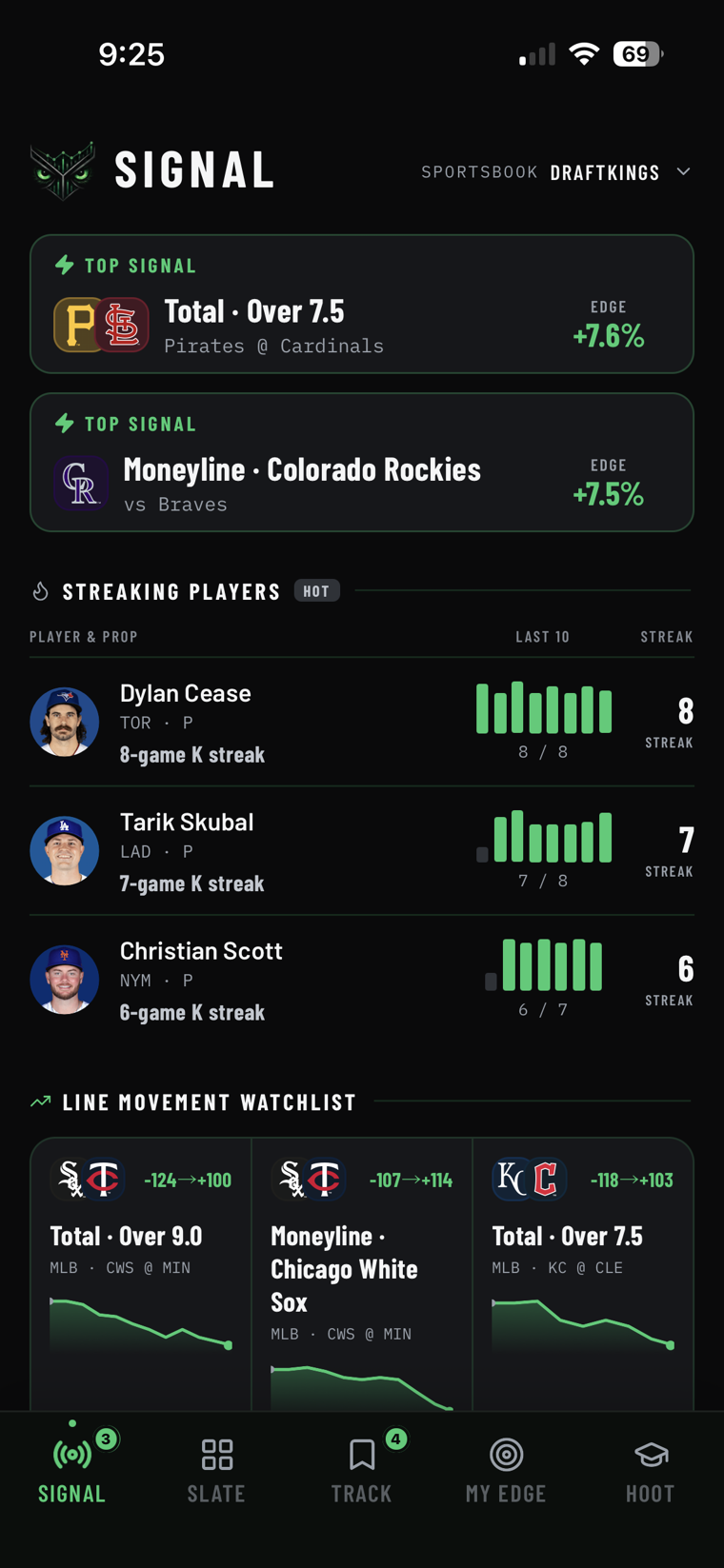
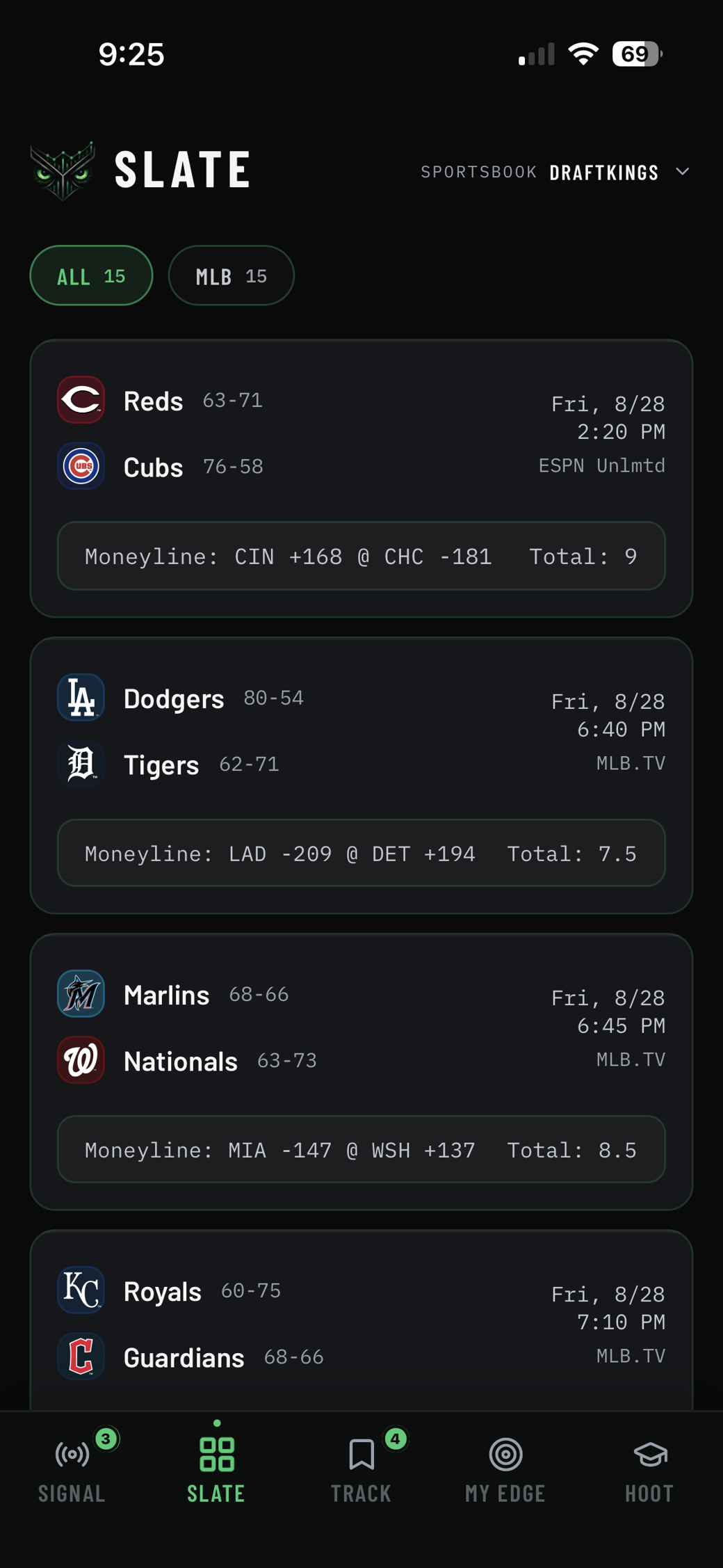
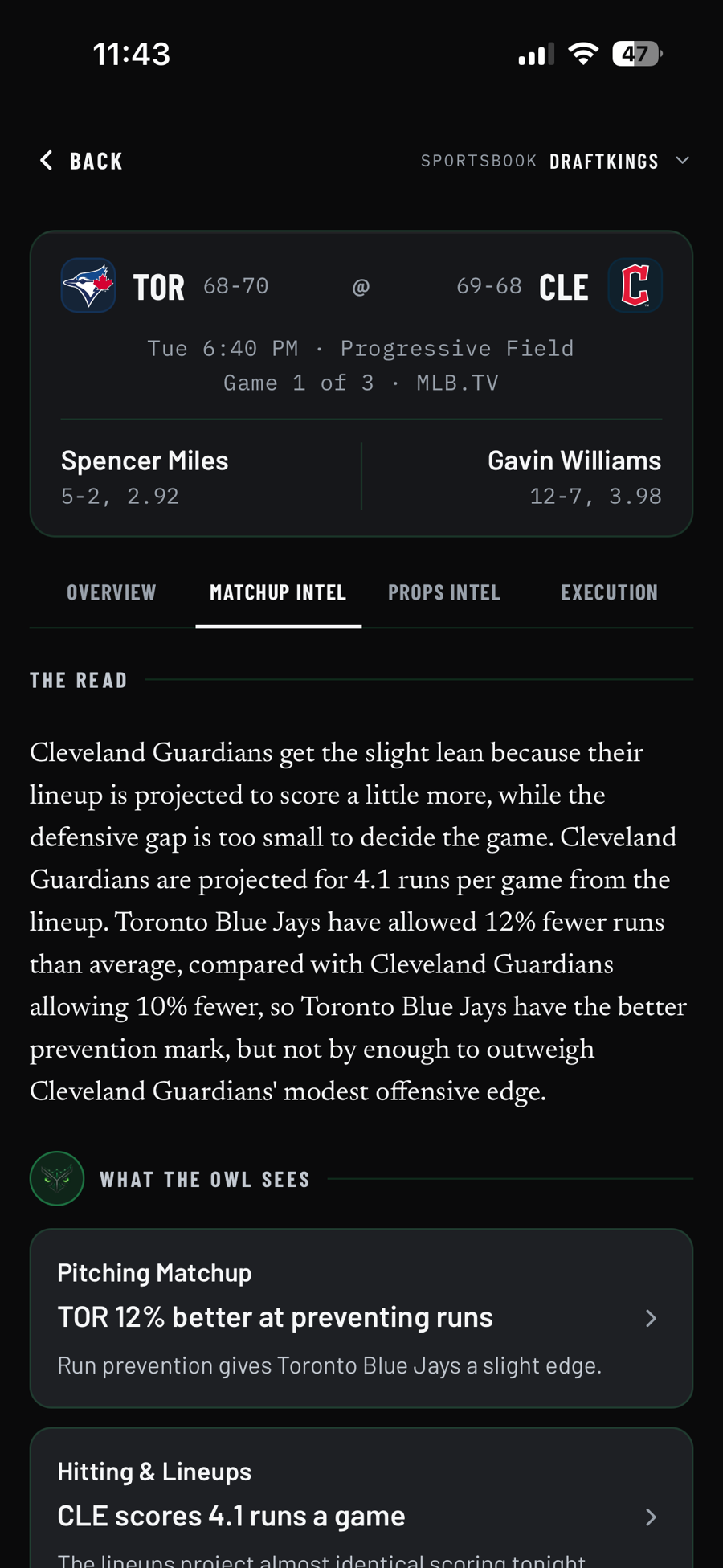
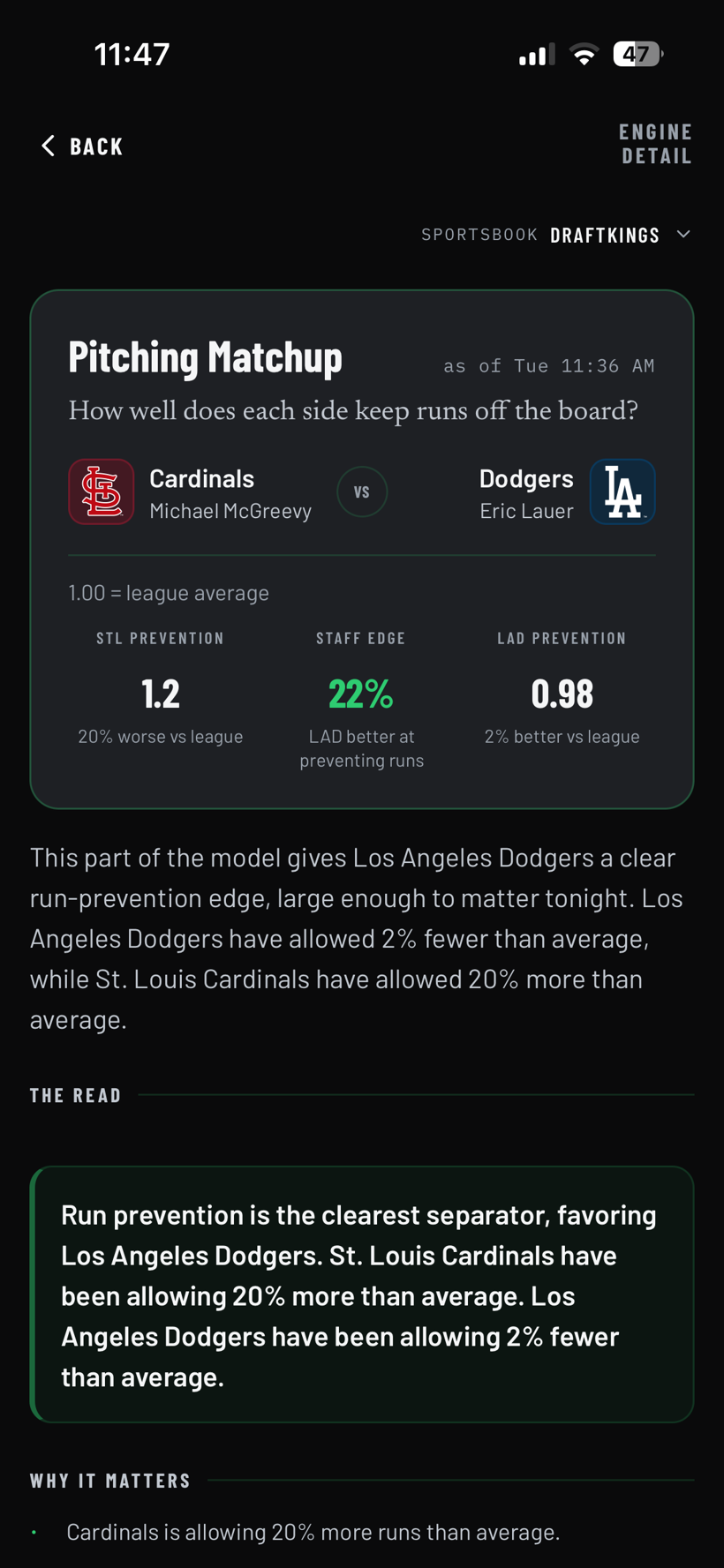
Owl & Odds is a decision desk for sports markets. Every game passes through the same seven-engine analysis. We verify the latest information, show where the data and the market agree or conflict, and tell you whether there is an edge, the game is priced fairly, or the number has gotten too expensive. You decide what to do with it.
A complete analysis can still lose. The promise is not certainty. It is a current, transparent and complete view before you decide.

You are going to bet the Sunday game. You are going to bet your team. We are not going to pretend a product works by telling you no and leaving you with nothing.
So we do the work on all of it. Every game, every night, whether we would put money on it or not.
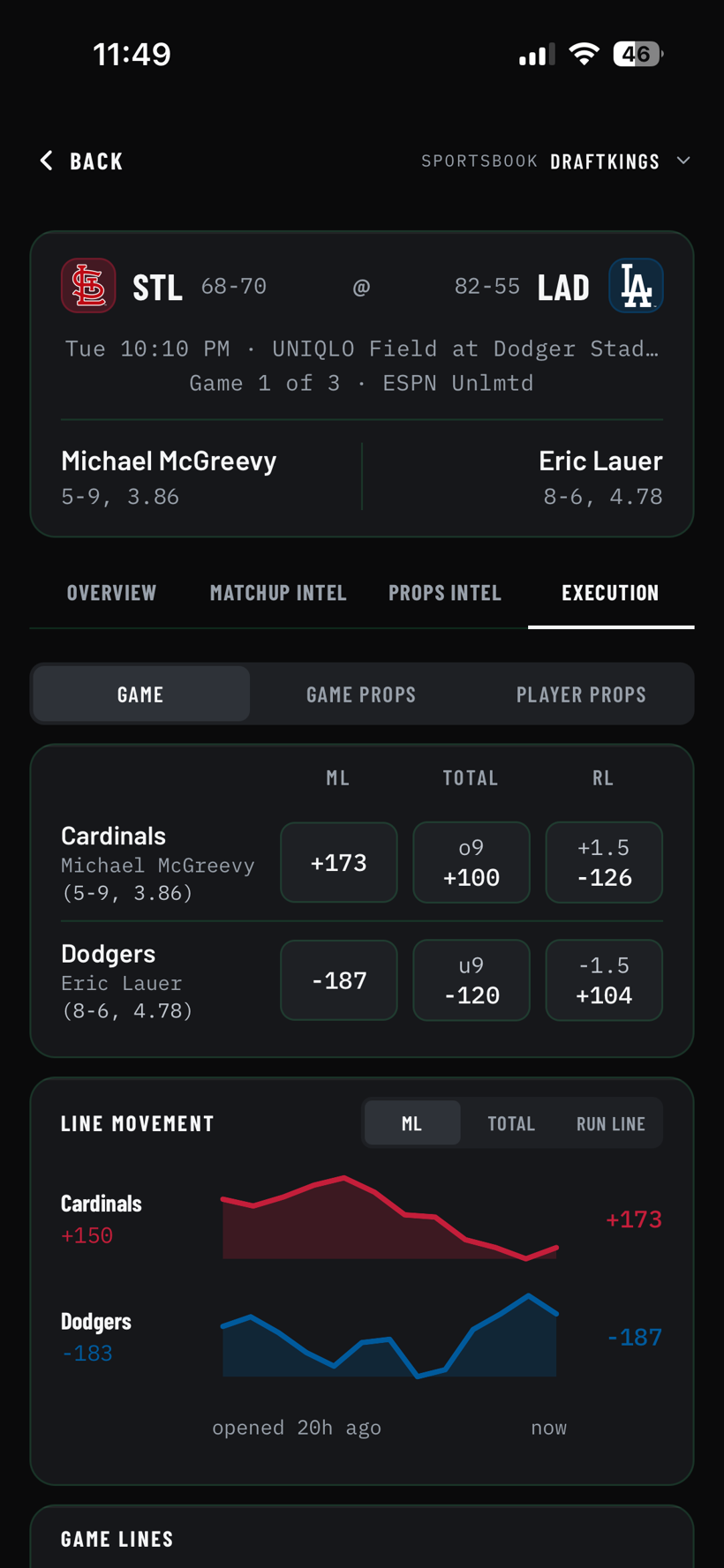
Every game passes through the same seven-engine analysis, using verified, current information. The system compares our estimated fair range with the available market price, checks where the analysis agrees or conflicts, and identifies the variables that could change the conclusion.
You see the evidence behind every conclusion without having to interpret the underlying model.
You receive one of four conclusions on every game:
The current price sits far enough outside our estimated fair range to qualify as an edge under our criteria.
The market price sits within our estimated fair range. We do not see a measurable advantage.
An advantage may have existed, but the price has moved beyond our cutoff.
Important information is missing, conflicting, or changing. We cannot support a reliable conclusion yet.
Confidence in the decision does not mean certainty in the result. It means knowing the decision was made using current information, transparent reasoning, and a price that still makes sense. A complete analysis can still lose.
Owl & Odds exists to prevent the avoidable version of losing: acting on a lineup that already changed, paying a price after the edge disappeared, mistaking disagreement between engines for confidence, or forcing action on a game the market had already priced correctly.
You are still the one betting. Take it with the whole picture in front of you instead of a hunch: the fair range, how much you are overpaying, which side the market has been moving toward, and where the value runs out. That is the difference between a bet and a guess, even on a bet we would not make ourselves.

Most products run one model on one data feed and call it analysis. We pull from wherever the truth lives, every day, before the card is written.
Checked against more than one source, because a name on a betting app is not a confirmation. In one recent week we caught a listed starter who was not really starting, a player making his professional debut with no record to model, and two games where two sources disagreed about who was playing.
For every club in every league we cover, refreshed daily, so the engine knows the difference between a good team and one good player having a good night.
The same bet trades at different numbers at the same moment, and telling you that is often worth more than any model output.
We once spent a week unable to explain why the market hated a team. The answer was an injury list we had never pulled.
Including the days our model is blind. A scoring line moved sharply at one venue this week, and the most likely explanation was weather our model could not see. We said so on the page instead of pretending our number was right.
This is what "showing our work" means in practice: showing the material evidence, assumptions, conflicts and reasoning behind every game. It does not mean publishing the underlying model or its weighting.
Sportsbooks build a margin into their prices, and professional market participants continuously search for mistakes. You are entering a market designed to be difficult to beat over time.
Injuries, line moves, weather, lineups, matchups. All of it is public, but it is scattered, constantly changing, and difficult to evaluate quickly with a job and forty minutes.
Everyone has a process until their team is losing and the phone is already in their hand. Rules only work when something outside your own willpower enforces them, and most products in this category are built to encourage exactly the opposite.
We built a model to predict games and tested it across 582 matchups, one week at a time, never letting it see the future. It performed well. It predicted results better than the betting market's own numbers did.
But predicting the game was only part of the question. We also needed to know whether those predictions created a real advantage at the price available. So we measured the model against the closing price, the market's final view right before a game begins.
What we learned changed the direction of the company. By game time, the market had already absorbed most of what our model knew. The model could predict games, but prediction alone was not enough. A strong forecast does not automatically mean a good decision at the current price.
The model did not become the product. Understanding what the model could not see did. The real opportunity was in everything around the prediction: knowing when the market has already done the work, understanding the price you are paying, catching information a model may miss, and keeping an honest record of every decision. That became the company.
From the day we launch, every published edge will be timestamped and added to a permanent public record.
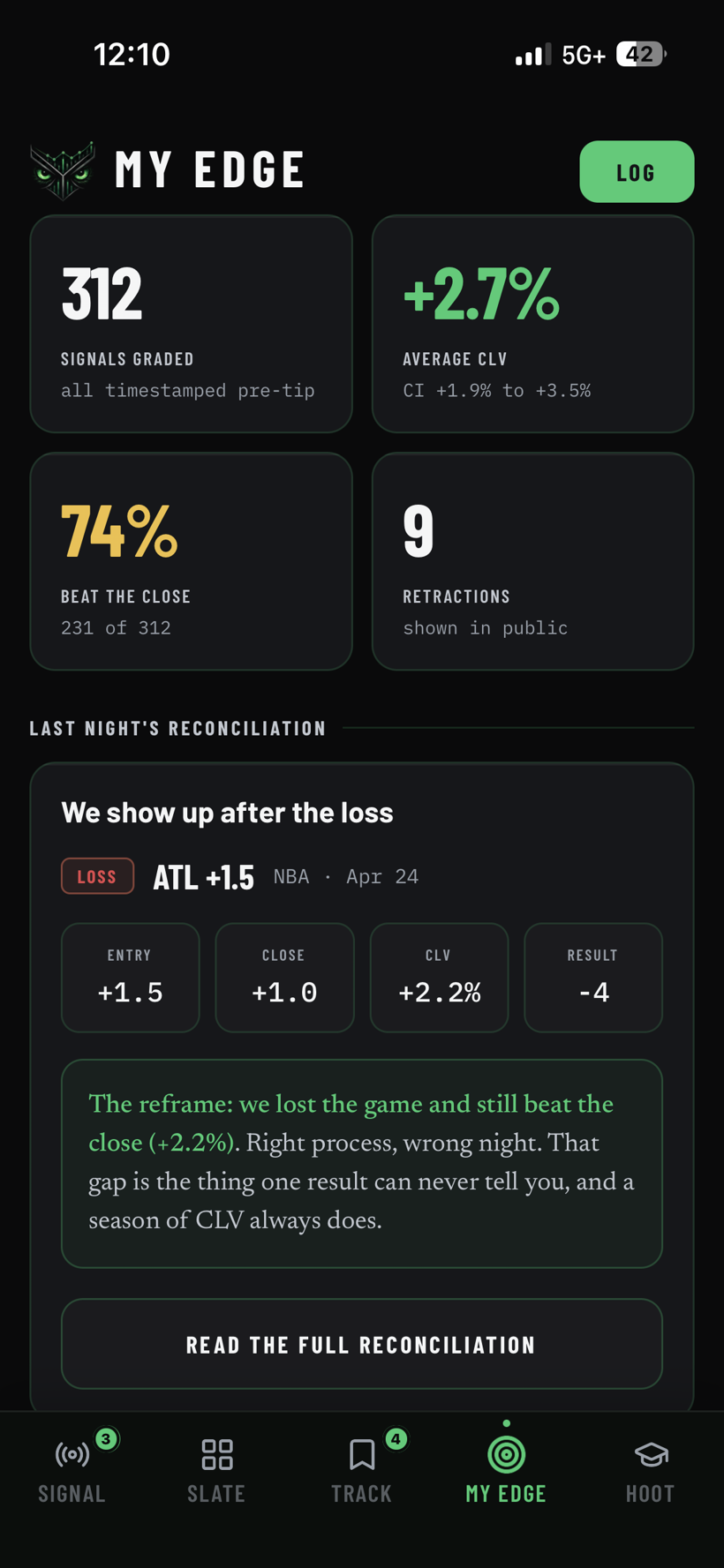
You will see the price available when we published, the point where we said the value ended, the market's closing price, and the final result. Wins, losses, pushes, retractions, and corrections all stay visible.
A win-loss record is part of how you should judge us, but not the only part. Short-term results can be driven by variance. We will also show whether the market moved toward our number, whether the reasoning behind the decision held up, and how much evidence the record actually contains.
The record begins at zero because we have not published anything yet. It will fill in forward, in public, with no backfilled history and no deleted losses.
Your win rate lies to you. A great month and a terrible month can be the same quality of betting, with luck making up the difference.
So we measure you the way professionals measure each other: did you get a better price than the market's closing number? That question strips the luck out and tells you whether you are actually improving.
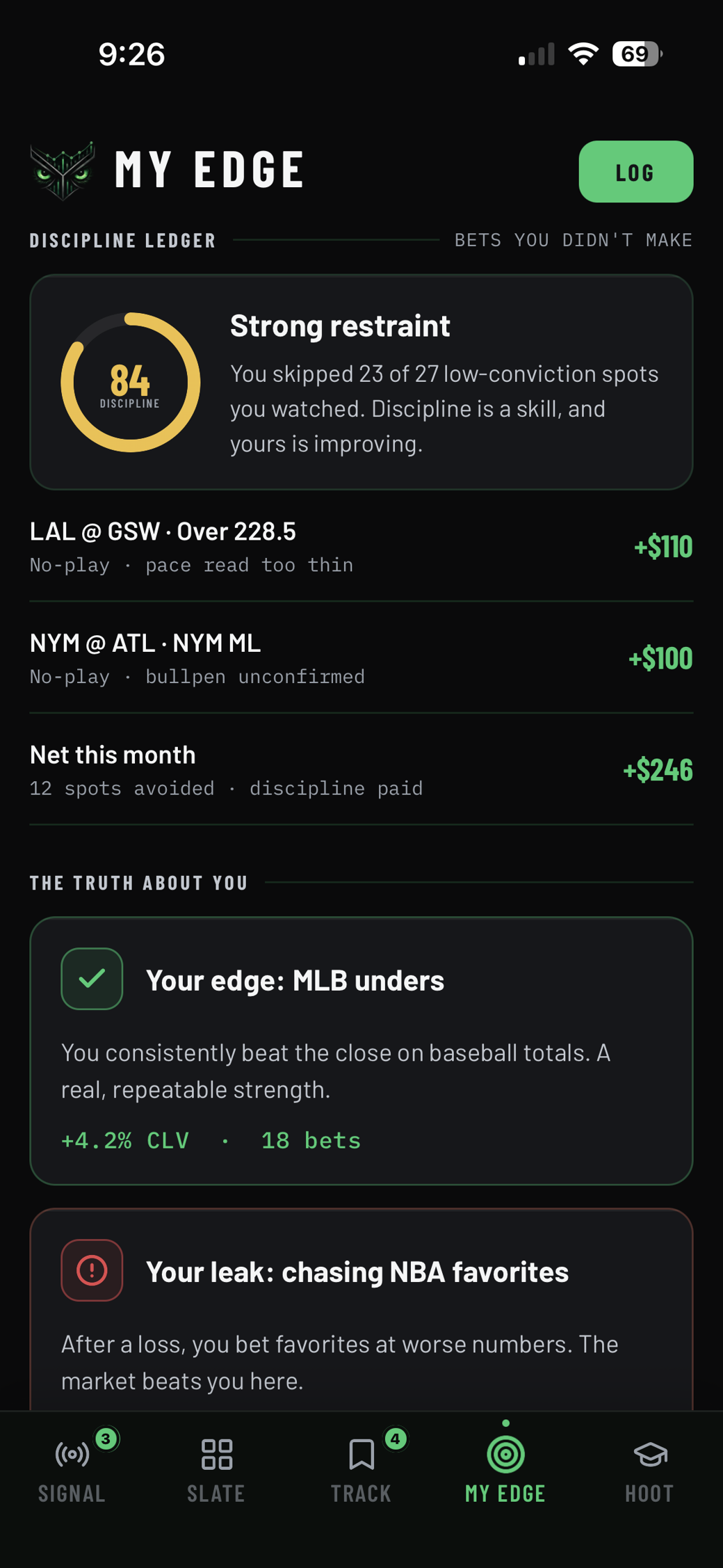
We also track the bets you did not make, and what they would have cost or saved you. A sportsbook will never build a feature that celebrates not betting. That is exactly why it works.
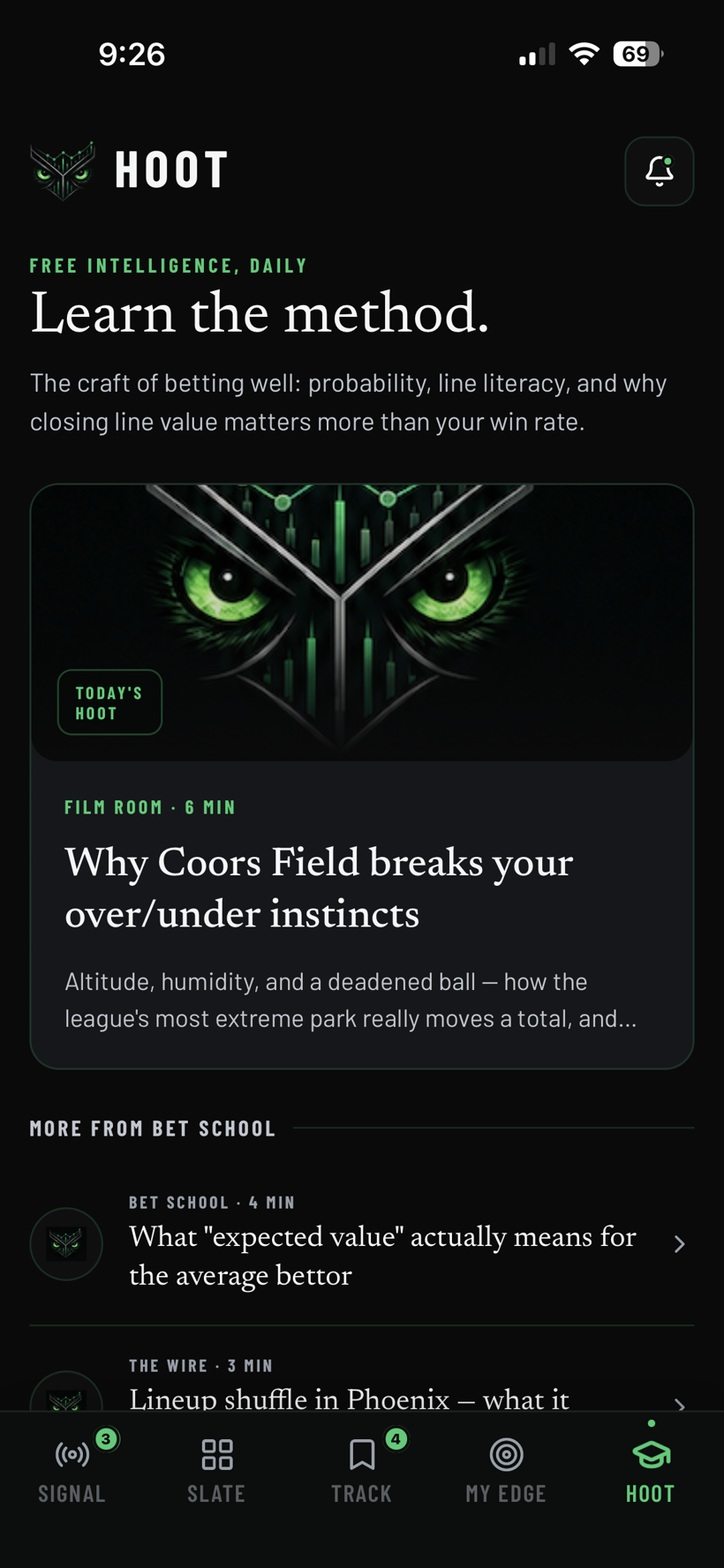
The part of Owl & Odds that is finished and free right now. A short daily read on how betting actually works: how prices are set, how to read a line move, why the closing number matters more than your win rate.
No picks in the free edition. Partly regulation, mostly philosophy. We would rather teach you the method than sell you a tip.
The one number that separates skill from variance, explained without the jargon.
Read free →A 60% week and a 40% week can describe the exact same skill. Here is why.
Read free →The market is the smartest bettor in the room. Learn to read its fingerprints.
Read free →I am Benny Rachamim. I built Owl & Odds because making an informed decision had become a full-time research project.
The information was everywhere. Injuries on one tab. Line movement on another. Matchup data somewhere else. Weather, roster changes and confirmed starters arriving at different times from different sources.
I would spend hours building a view of a game, only to discover that something important had changed. A price moved. A player was ruled out. A lineup was confirmed. By the time I found it, the decision I had been considering was based on an incomplete or outdated picture.
I was always looking for an edge, but the bigger problem became clear: the information existed. A reliable way to bring it together, keep it current and understand what it meant did not.
So I built the product I wanted to use.
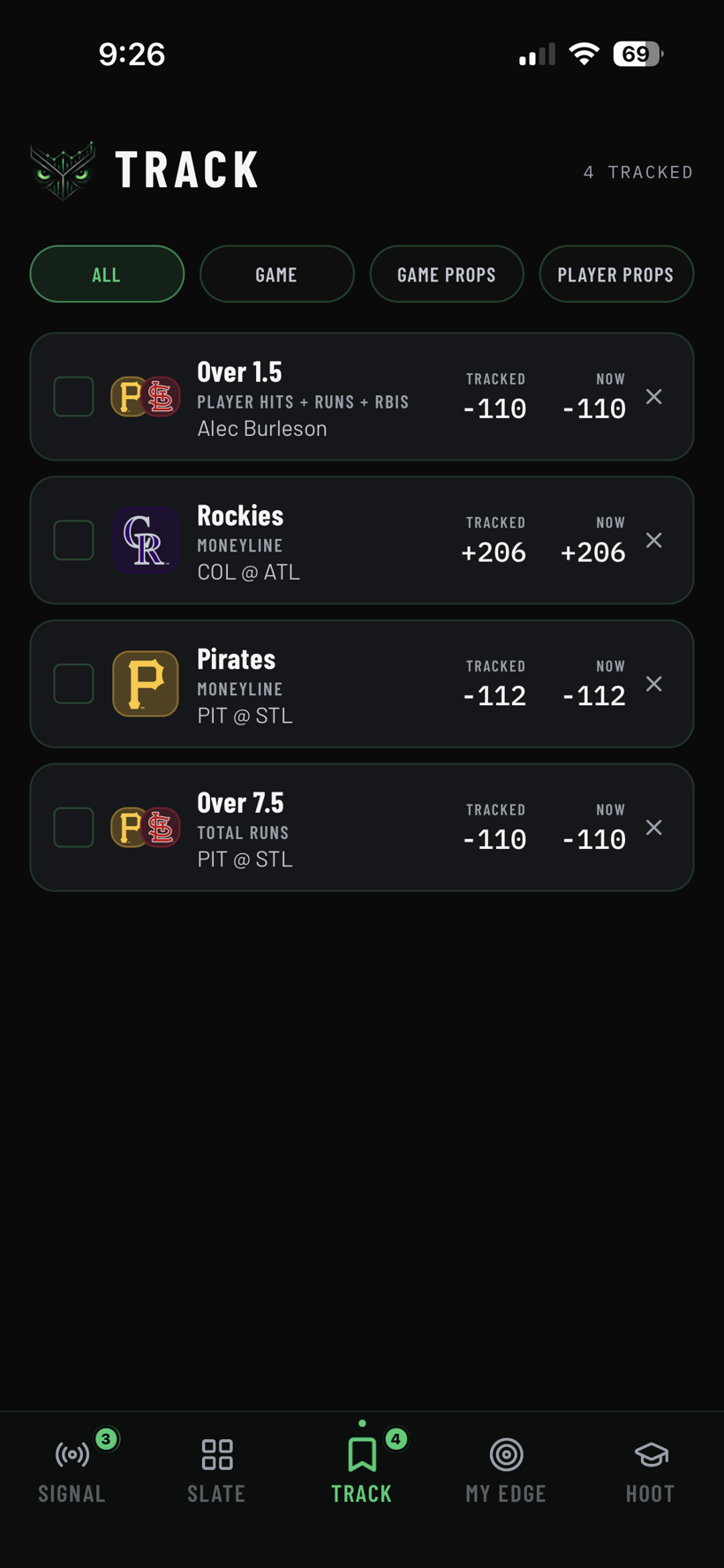
Owl & Odds does the homework on every game, brings the important variables into one place, shows where the analysis agrees and where it conflicts, and tells you whether the current price still makes sense. It also helps you recognize when the information does not support a decision at all.
It will not make every decision right. Nothing can. But it gives you a current, complete and transparent view before you decide.
That is why I built Owl & Odds. — Benny Rachamim, Founder
Sports betting is one of the few large consumer markets where people risk real money with no tooling. Every other market solved this decades ago. Traders have terminals. Investors have research platforms. Bettors have group chats and screenshots.
We are starting with NFL, NBA and MLB because that is where the volume is. The same system can expand across additional leagues and market types without changing the standard: current information, transparent reasoning, and a clear price decision.
Founding members get in first, keep founding pricing for as long as they stay, and get My Edge included from day one.
Free Daily Hoot from tomorrow. Launch notice the day we open. One click to leave.
Founding price locked at $14.99 a month, permanently, for the first members through the door. No card today.
Owl & Odds is an analytics and entertainment product, not betting advice. We never accept wagers and do not hold any gaming license. Must be 19+ or of legal age in your jurisdiction. Past results do not guarantee future results. If gambling stops being entertainment, help is available: the National Problem Gambling Helpline, 1 800 522 4700, free and confidential, anytime.